The Quiet Power of Haptics in 007 First Light
Vasguen Vardanian · · Effects Design
The most effective haptic effect may be the one you barely notice. 007 First Light shows how restraint, timing, and contrast can communicate stealth, weapon power, and player intent.
In a spy game, not every sensation should shout.
Today, we’re diving into 007 First Light to explore a design intention that is easy to underestimate and yet hard to master: subtlety.
Today, we’re diving into 007 First Light to explore a design intention that is easy to underestimate and yet hard to master: subtlety.
007 First Light is a useful case study in haptic design for games: how small, precise effects can support tension, stealth, and player feedback without overwhelming the experience. In our previous articles on Marvel Rivals and Battlefield 6, we looked at haptics and Chroma effects through impact, movement, and spectacle. Here, the same foundations are used in a quieter way.
This is a game of tension, infiltration, and discretion: Bond moves through guarded areas, bluffs his way past suspicion, and only occasionally lets things get loud. If every effect across the Razer Freyja, Wolverine V3 Pro and Kraken V4 Pro played at full strength, the experience would become exhausting — and worse, the big moments would lose all their impact.
That is the key lesson for developers working with haptic feedback in games: subtle feedback is not weaker feedback. It is feedback with a narrower job.
This article moves through a selection of haptic and Chroma effects from 007 First Light, from the most discreet interactions to the most forceful, to show how restraint shapes readability, pacing, weapon hierarchy, and player intent.
Bluff: Minimal Confirmation
A successful bluff should be felt, but barely noticed.
The Bluff sits at the heart of the spy fantasy: convincing a guard to let you through when he really shouldn’t. Here, the player needs confirmation that the deception worked, but a strong effect would break the social tension of the moment.
The haptic solution is reduced to one discreet transient at moderate amplitude, distributed across the body. No note, no envelope, no dramatic tail. Just a single pulse that validates the action and disappears immediately.
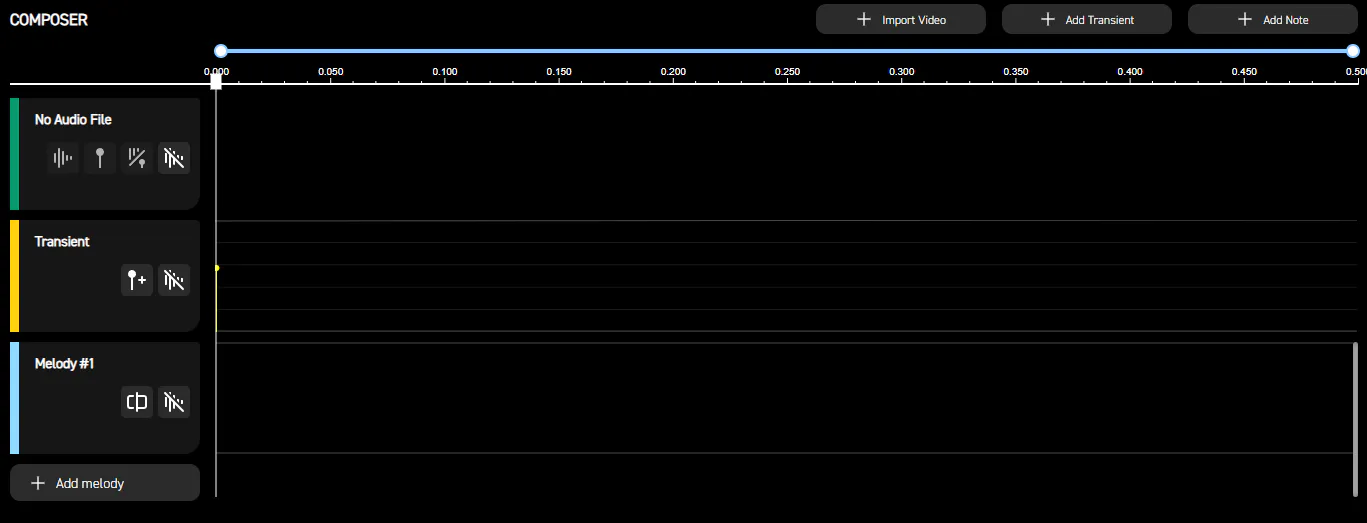
The Chroma layer follows the same rule of economy. A brief violet pulse—a color reserved for Bond’s spycraft throughout the game—confirms the interaction without competing with the scene.

The takeaway here is simple: confirmation feedback does not always need duration. Sometimes one well-placed transient is enough.
Lure: Same Vocabulary, Different Localization
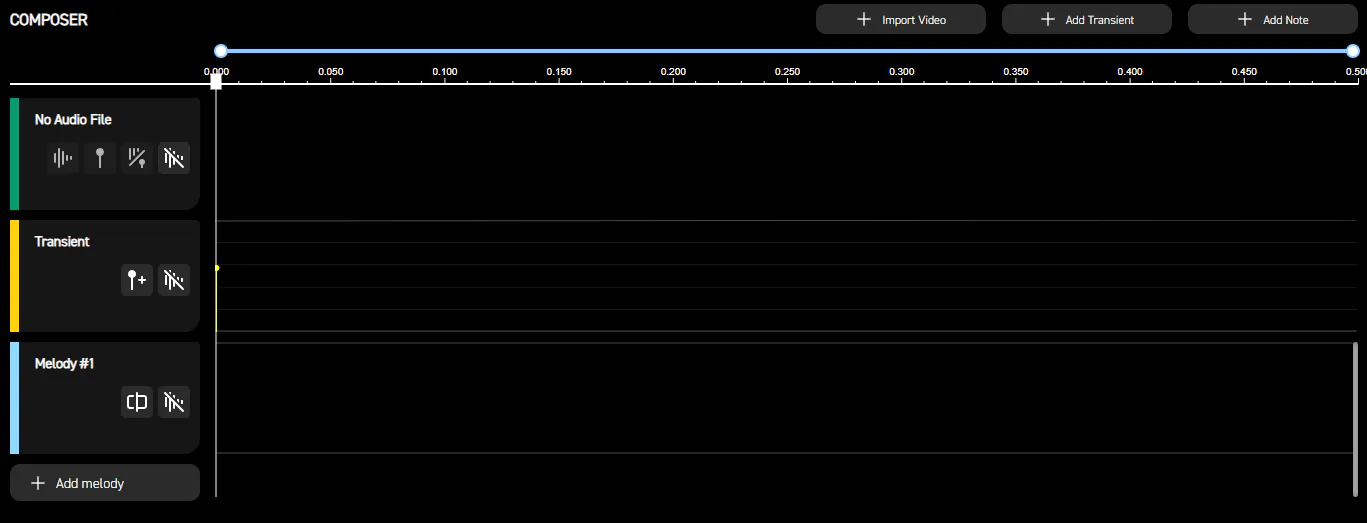
The Lure lets the player draw a guard’s attention and move him away from their position. It is close to the Bluff in spirit, and the haptic reflects that kinship: it’s the exact same effect, with one difference — it only plays on the chest.
This is one of the most economical tools in haptic design. Two stealth actions can feel related without feeling identical. The player learns the distinction not through more intensity, but through placement.
That only works when effects are subtle enough for localization to remain perceptible. If both interactions were too strong, the difference would be harder to read.
If you are designing haptic experiences in games, this is an important principle to learn: localization can do the work that amplitude usually does.
Focus On / Focus Off: Communicating State Change
When Bond enters his focus state, the world sharpens. The challenge here is to communicate a shift in perception without suggesting impact, collision, or physical force. Nothing is hitting Bond. The player is just entering a different state.
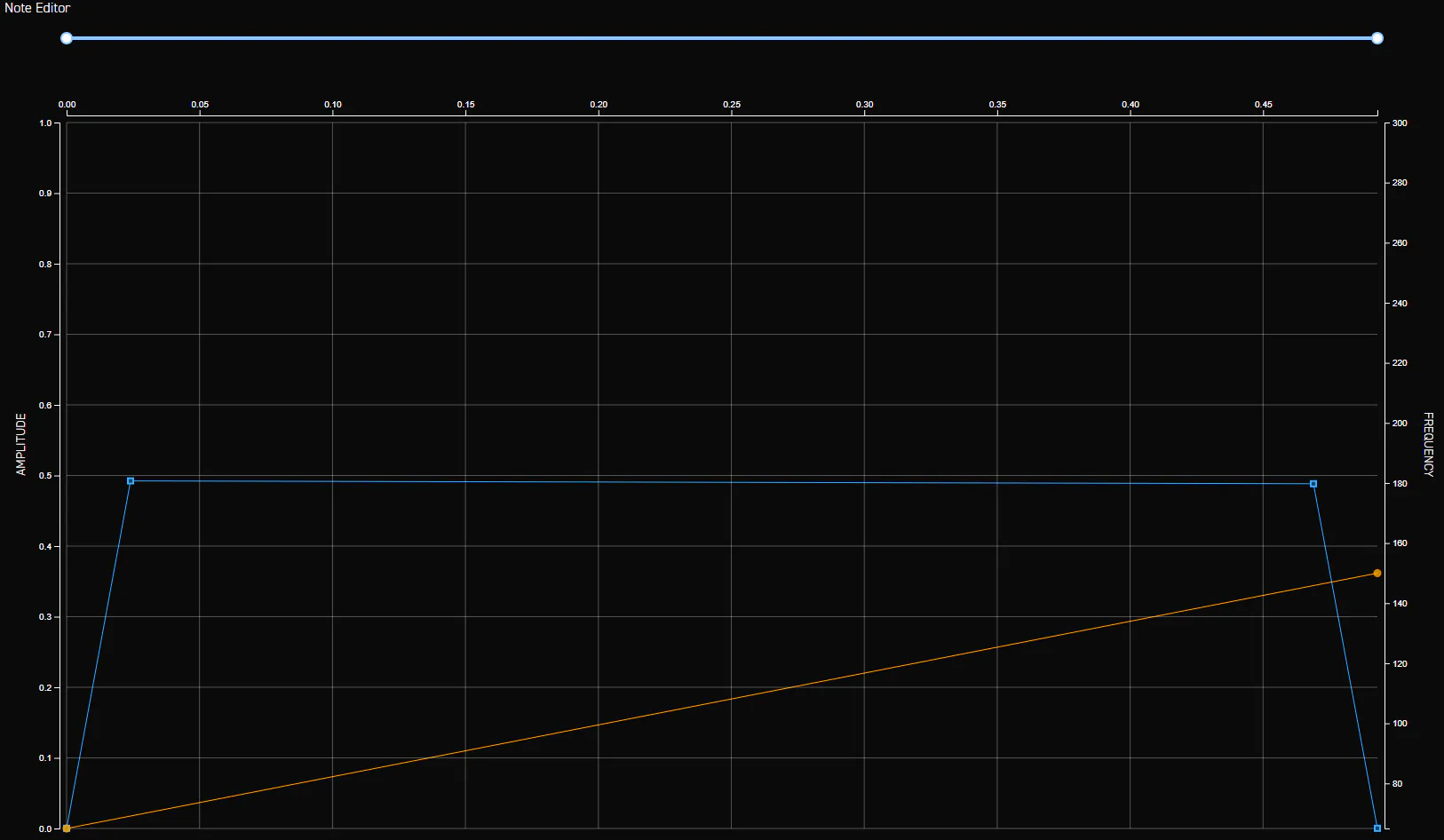
For that reason, amplitude is deliberately capped at half its maximum value. The main information is carried by frequency.
On activation, the frequency rises progressively. On deactivation, it falls along the inverse curve. The player does not feel a stronger or weaker vibration, but a direction: upward when entering focus, downward when leaving it. It’s the frequency, not the amplitude, that carries the information.
For haptic designers, this is a useful reminder that frequency can communicate change without increasing intensity. When amplitude stays controlled, a rising or falling frequency curve can still give the player a clear sense of transition, direction, and state change.
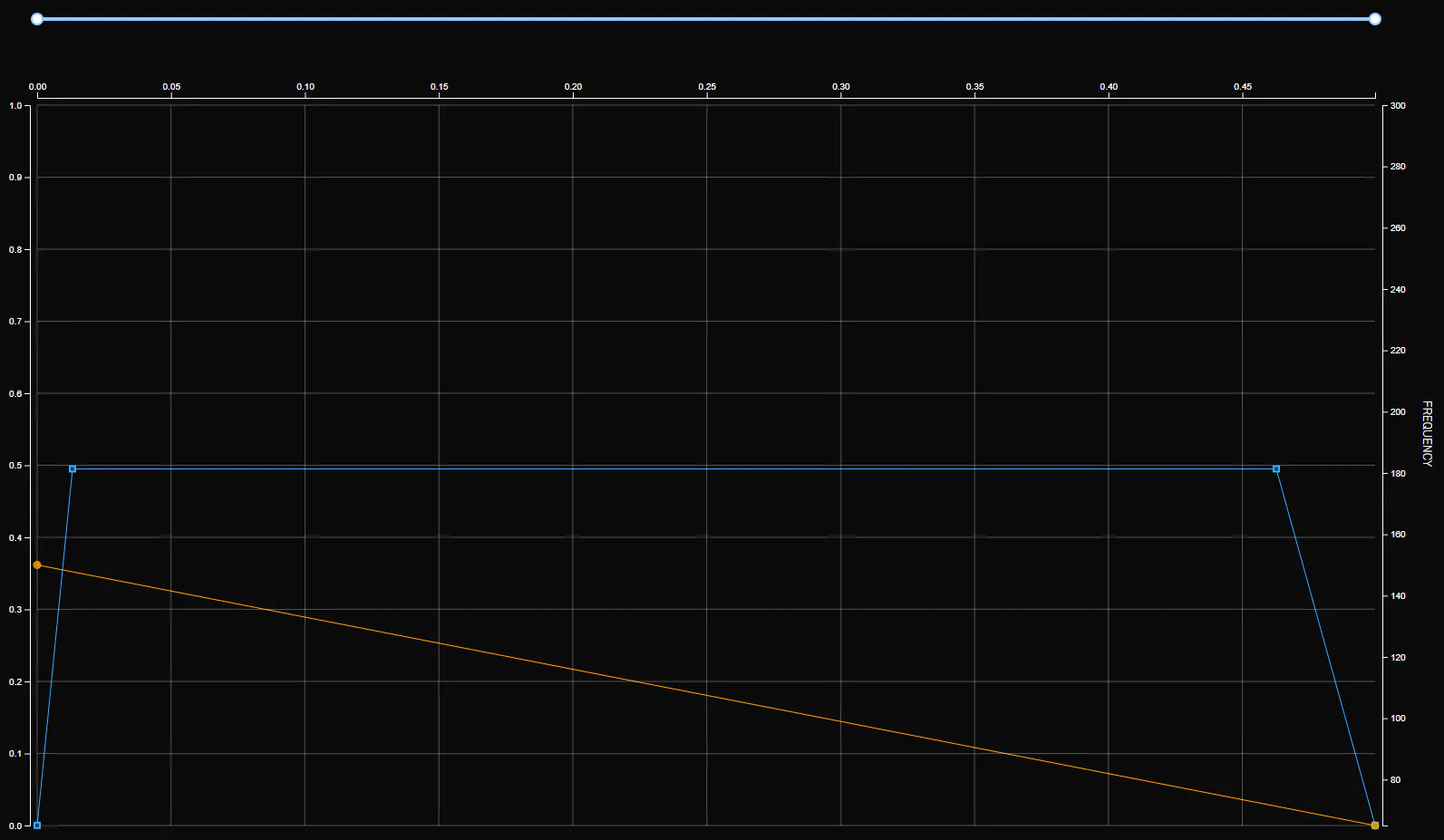
The Chroma effects follow the same logic. A deep blue intensifies on activation and fades on release, reinforcing the idea of perception opening and closing.


DartPhone: A Two-Step Effect
The DartPhone works in two stages: arming the device, then firing. The goal here is for the player to understand that mechanism through touch alone.
The haptic effect follows the same structure. First, a gentle rise in amplitude, paired with frequency gliding upward. This creates anticipation. Then, immediately after, a single isolated transient at full strength marks the shot.
Two simple elements, clearly separated in time: preparation, then release.
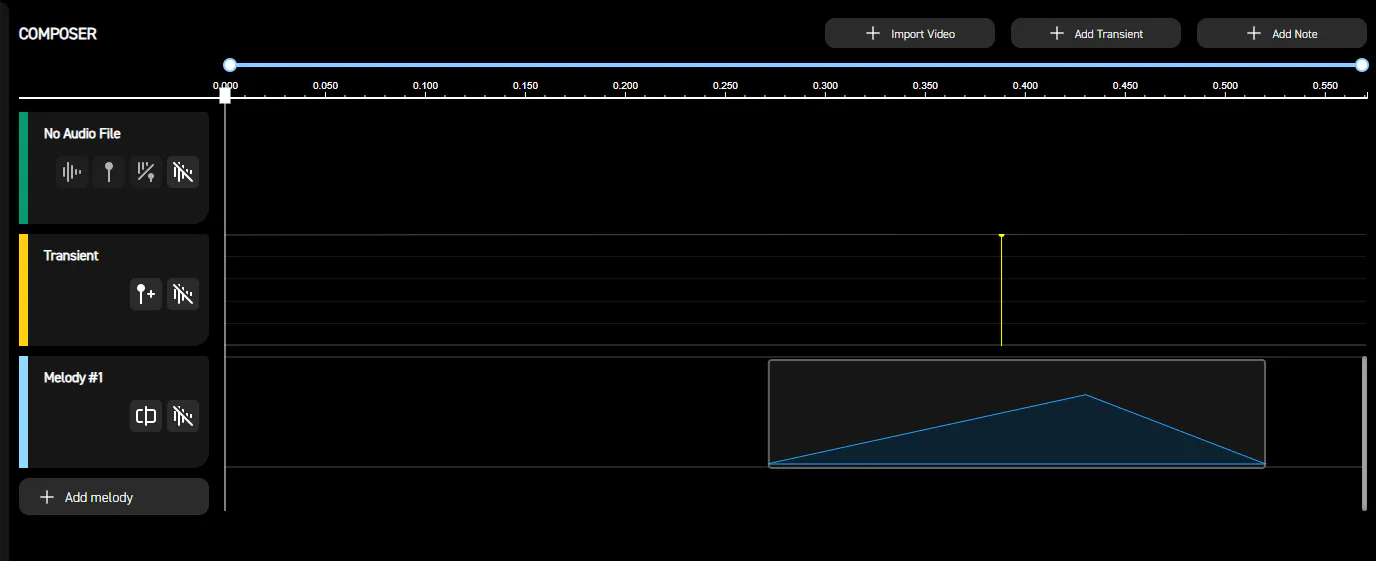
The Chroma animation tells the same story in light: two silver-white pulses, one soft, one sharp.

This is a strong example of haptic sequencing. The effect does not simply decorate the action; it reflects how the interaction works.
Here, timing communicates the mechanism's function. A haptic effect can tell the player not only that something happened, but how it happened.
Restricted Area: Warning Without Fatigue
Restricted areas need to warn the player without punishing them. The signal has to say: you are entering a risky space, but the situation is still recoverable.
The effect uses two short transients, with the second weaker than the first. A decreasing double-tap, over almost immediately. It informs without alarming.
That short duration matters. Because the effect is light and quick, it can repeat as the situation evolves without becoming irritating. In stealth design, this is critical. A warning that repeats too aggressively becomes noise. A warning that is too weak becomes invisible.
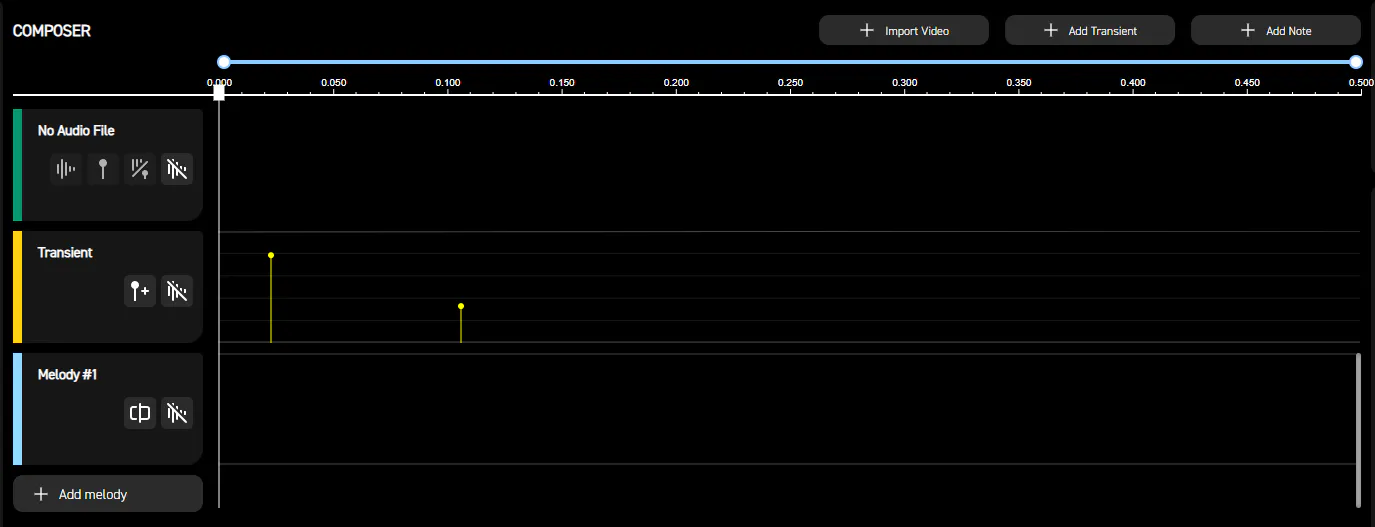
The amber Chroma lighting carries the growing tension more gradually, building intensity while the vibration stays minimal.

This is a good example of splitting the sensory workload. Restraint is not about making every layer soft. It is about deciding which layer should carry which signal.
If you are designing haptic feedback for stealth, UI alerts, or proximity warnings, remember that repeatability should be part of the design brief from the beginning.
Weapon Feedback: Building Power Without Losing Restraint
Weapon haptics are often where designers are tempted to push amplitude as high as possible. But in 007 First Light, even the combat feedback follows the logic of restraint.
The weapon hierarchy is not created only by making every gun stronger than the last. It is shaped through a combination of amplitude, decay, cadence, transients, and triggering logic.
Pistol: A Controlled Shot
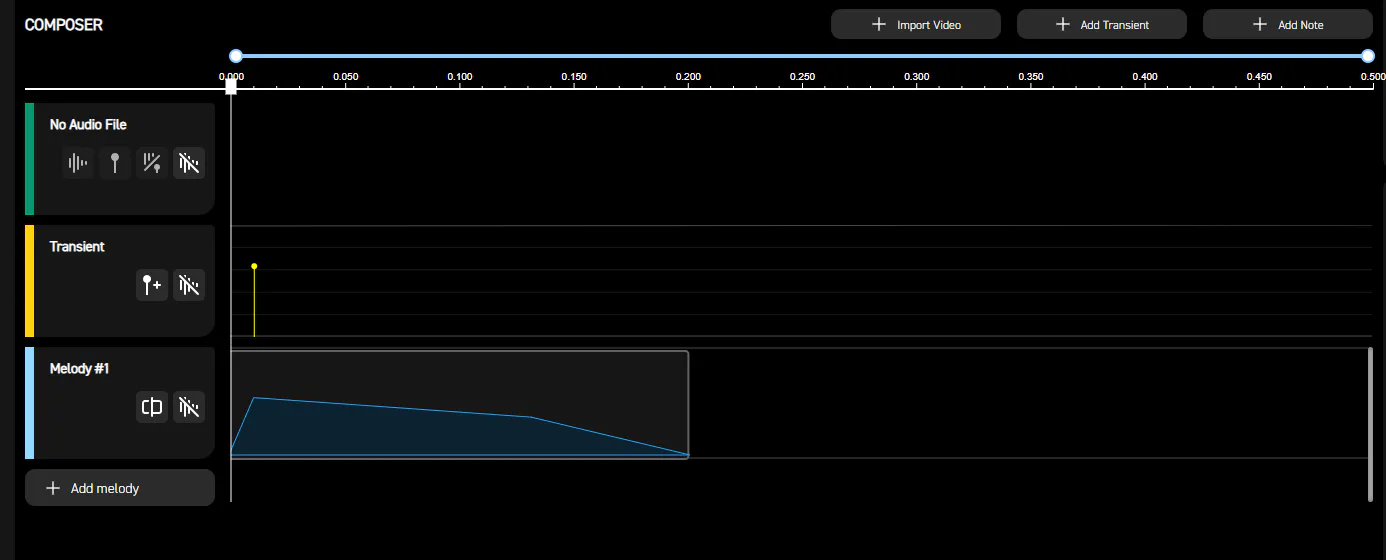
Even when things get loud, 007 First Light remains a spy game. The pistol is Bond’s signature weapon, and the haptic intention is precise and contained. It does not need to feel explosive. It needs to feel accurate.
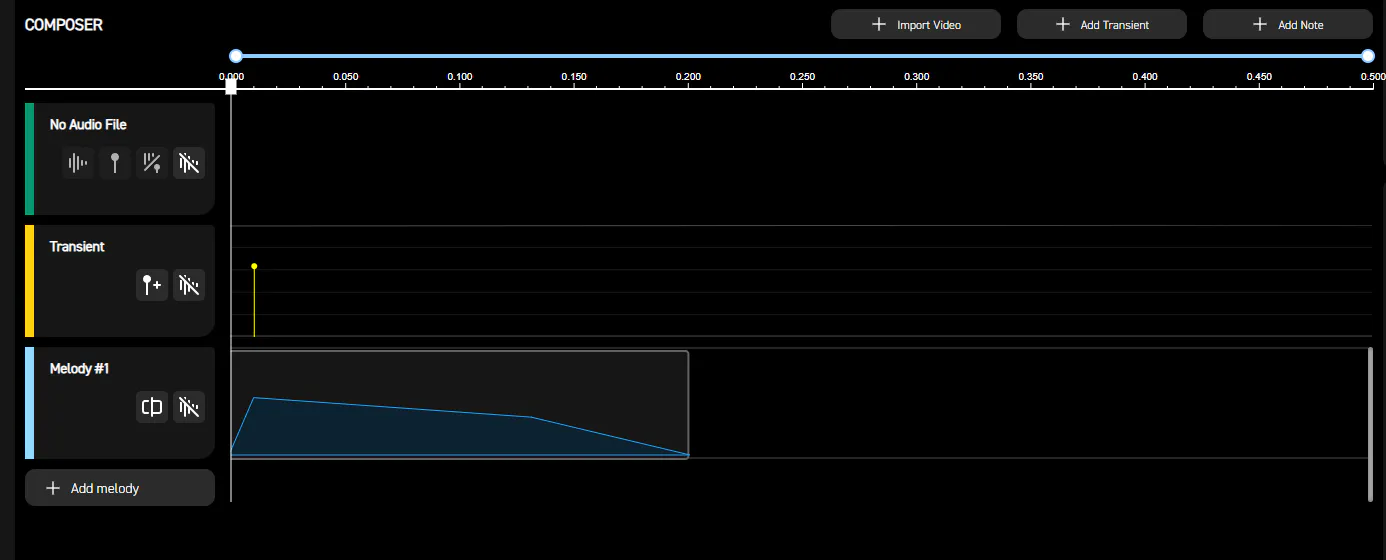
The amplitude never reaches maximum. The frequency drops quickly after the impact. A single transient marks the crack of the shot.
It follows the classic structure of a weapon effect — attack, then decay — but with a lower ceiling and a shorter tail. The result is clean, sharp, and controlled rather than heavy.
SMG: Power Through Cadence
The SMG is a good example of how much of haptic design happens outside the effect itself.
Instead of using a bigger effect than the pistol, the SMG uses the same base effect, triggered on every bullet. Because the weapon fires in rapid bursts, the perceived power comes from accumulation. Each individual impact remains light, but cadence multiplies the sensation.
The SMG ends up feeling more powerful than the pistol while staying light at its core — exactly what a fast weapon needs.
This is an important lesson for real gameplay conditions. A haptic effect should not be judged only in isolation. It should be tested in the rhythm of the action that triggers it.
Subtlety does not only live inside the effect itself. It also lives in how the game calls that effect.
Shotgun: Setting the Upper Limit
Every discreet system needs its ceiling, and in 007 First Light, that ceiling is the shotgun. It’s the strongest effect in the set: maximum amplitude held in a plateau, a long decay, and several powerful transients packed into the very first moments of the shot.
And yet, even here, restraint is present. The frequency stays low and oscillates slightly throughout the effect. That gives the shot weight and recoil rather than pure aggression.
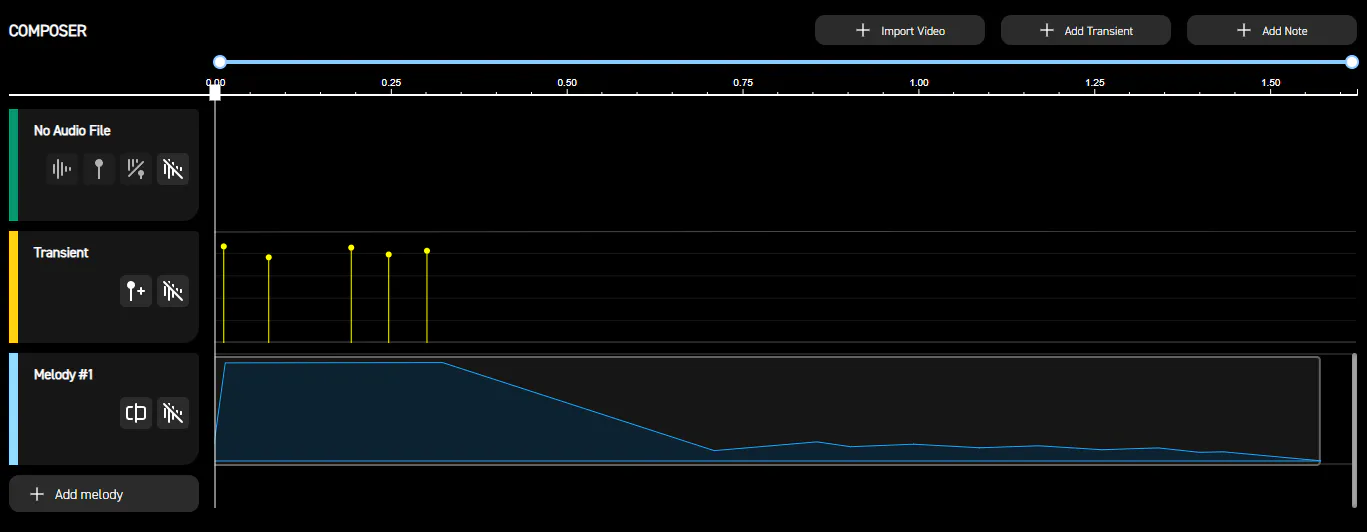
This is where the whole haptic design philosophy pays off. The shotgun feels enormous precisely because everything else in the game has been held back.
If every interaction played at this level, the shotgun would stop feeling special.
Assault Rifle: Softening Weight Through Truncation
The assault rifle combines the two previous ideas, but in the opposite direction from the SMG. Instead of multiplying a light effect, it borrows the heaviest effect in the arsenal — the shotgun effect we just covered — and triggers it on every bullet with Override mixing.
This works because the shotgun effect ends with a long decay. At assault rifle cadence, each new shot cuts off the previous one before that tail can fully play out. The player receives the strong attack of each impact, but never the full weight of the decay.
The perception is softened while each shot keeps its strength.
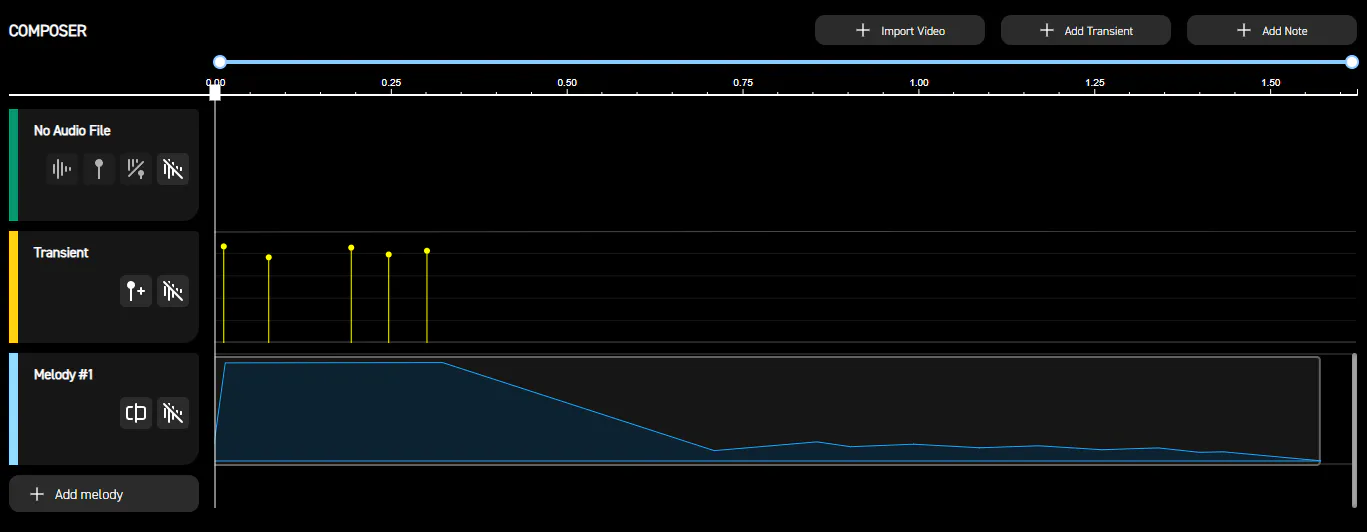
The result sits where it should in the weapon hierarchy: more imposing than the SMG, but not exhausting.
Together, the SMG and the assault rifle illustrate two sides of the same principle — you can strengthen a soft effect through cadence, or soften a heavy one through truncation.
This is one of the most important practical ideas in the article: implementation logic can change the perceived intensity of a haptic effect as much as the effect design itself.
Player Intent: Kick Door vs Sabotage Door
The clearest example of expressive haptic design comes from the door breach interaction.
In 007 First Light, a locked door can be opened in two ways. The player can kick it open, choosing the loud approach. Or they can sabotage it, choosing the silent approach.
Kick the door open, and the haptics deliver maximum amplitude across the whole body, a falling frequency, and a full-strength transient. It is direct, physical, and forceful.
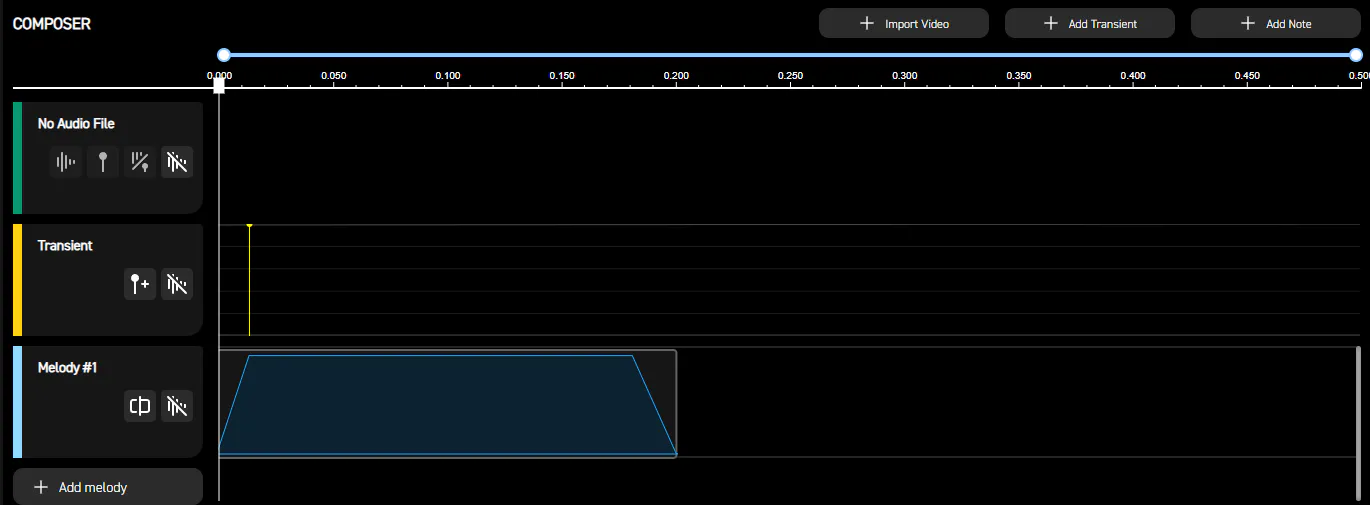
Sabotage the door, and the effect becomes almost surgical: an ultra-brief amplitude spike, reached in a few milliseconds and gone just as fast, with no transient at all. A simple snap — the mechanism giving way, nothing more.
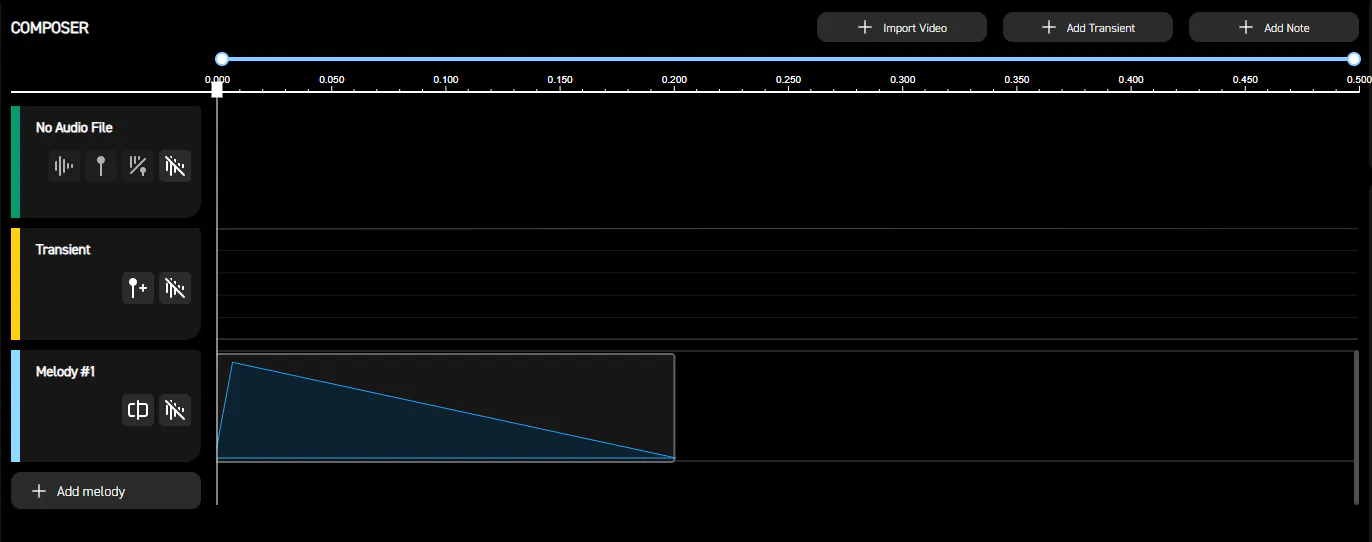
The Chroma layer marks the same contrast. A red flash supports the kicked door, placing it in the same color family as gunshots. The sabotage uses the violet of Bond’s gadgets, appearing for barely half a second.
Same door. Same outcome. Two completely different sensations. This is where haptics move beyond action confirmation. They translate the way the player has chosen to play.
What 007 First Light Teaches About Haptic Design
Across these examples, subtlety is not the absence of design. It is one of haptics’ most demanding disciplines.
When raw amplitude is reduced, every other parameter has to work harder. A transient can validate an action. Frequency can signal direction. Localization can separate similar interactions. Timing can explain a mechanism. Triggering logic can define the feel of an entire weapon class.
And the even larger lesson here is contrast.
Quiet effects are not quiet for their own sake. They protect the impact of the moments that should feel loud. In a game built around tension, discretion, and controlled escalation, restraint becomes a design tool — not just a stylistic choice. Subtlety opens up a range of possibilities we’ve only begun to explore, and we look forward to pushing it further in future games.
If you are exploring how to bring this kind of tactile feedback into your own games, take a look at our Haptics technology, which is great for integrating cross-platform haptics, and use our Haptic Composer to create, test, and refine your custom effects
Vasguen Vardanian, Immersive Experience Designer